






Latest Additions
- October 21, 2026
- Uncategorized
 by admin
It’s also one of the most beguiling – a warm-hearted
antidote to the glitz of the Amalfi coast further north. Within minutes
of leaving Lamezia airport I was heading south on the Tyrrhenian coast
road that eventually goes past two of Calabria’s most attractive towns,
Pizzo and Tropea. The latter is in a dramatic spot on a cliff where the
houses seem to blend into the rock face. One of the town’s beaches
catches the sun between the cliff and the rocky promontory where the
church of Santa Maria dell’Isola sits in a lofty grove of olive trees
and prickly pear cactus.
Calabria’s backbone is the southern
stretch of the Apennine mountain range that curves down to the tip of
Sicily. You can’t escape the hills here: only 10% of the region is flat.
The mountains gave refuge to people fleeing Saracen attacks and the
malarial marshes that used to cover the coasts. Now much of the thickly
forested range has been designated as national parks, from Pollino in
the north via Sila near the centre and Aspromonte in the south.
Away
from the major cities of Reggio Calabria and Catanzaro – where life can
be as frenzied as any place where you might find Italians behind the
wheel of a car – the pace trickles to a pleasantly slow one. Squiggly
roads snake through countless olive groves towards hilltop villages with
ruins of Norman fortresses and castles, such as the one that lords it
over Squillace and its numerous ceramics shops. Near the southernmost
tip is the strange ghost village of Pentedattilo, which was abandoned in
the 1960s and is slowly coming back to life. Craftspeople are buying
some of the empty stone houses; some day, perhaps, the village’s sole
year-round resident – a woman in her 80s – might have a permanent
neighbour. Since 2006 Pentedattilo has hosted an annual film festival
dedicated, its organisers say, to people “whose talent is screaming to
be recognised†– rather like Calabria itself.
What to do
Calabria
is known for its variety of beaches – from long sandy stretches to
pebbly coves. It has about 500 miles of coastline, which takes in all
the geographical variations of the Tyrrhenian and Ionian seas.
Follow
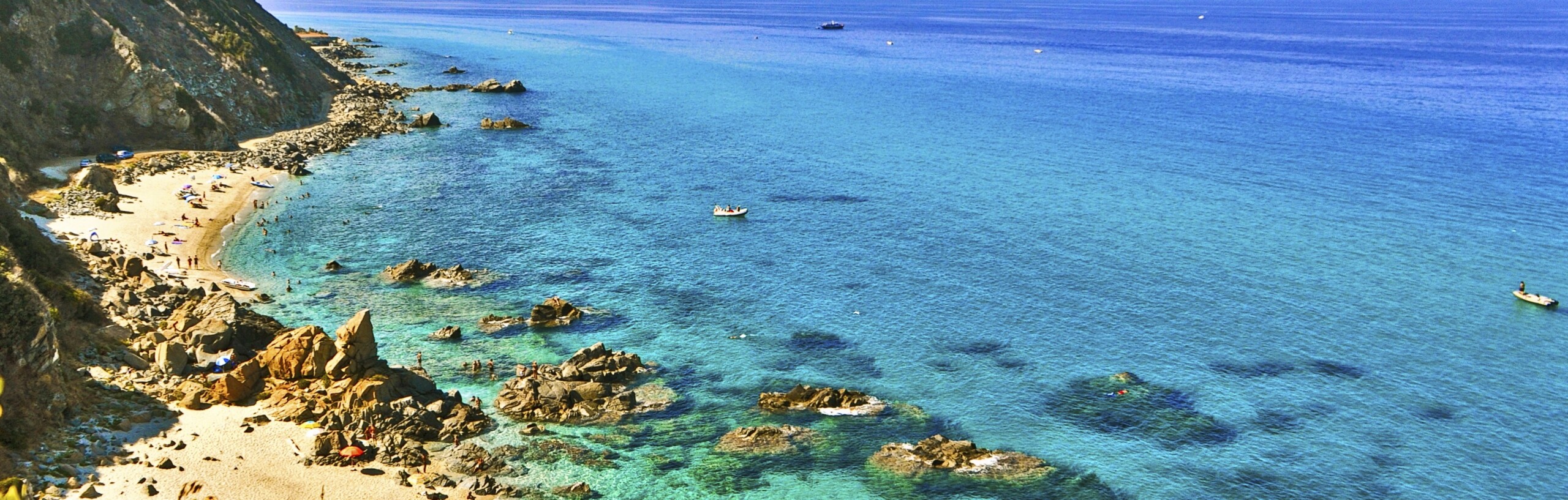
the twisting Via Grotticelle near Capo Vaticano’s lighthouse for a
selection of beaches tucked into the curves of the Tyrrhenian coast, the
final one reached by wading between the rocks. There’s a decent
combination of public beaches and commercial ones, with sunloungers for
hire. The daily rate for two loungers and an umbrella is €10.
Further
up the Tyrrhenian coast, towards the border with the Basilicata region,
is an almost unbroken stretch of beach resorts covering more than 60
miles. Amantea is old-fashioned seaside fun, with fine sand and play
areas for children. The train from Naples to Reggio Calabria stops here,
which makes for a good day trip if you’re staying in Tropea or Pizzo.
The
Ionian side has just as bewildering a choice. Caminia shelters beneath
the cliffs of the Pietra Grande, with fine gravel sand and an abrupt dip
into deeper water. Another five miles south is larger and livelier
Soverato, where colourful fishing boats break up the neat lines of
sunloungers.
To view the Article just CLICK HERE





Creating and maintaining successful business relationships throughout the world

A World of property at your finger tips.

So how do we get there.
Join The Discussion